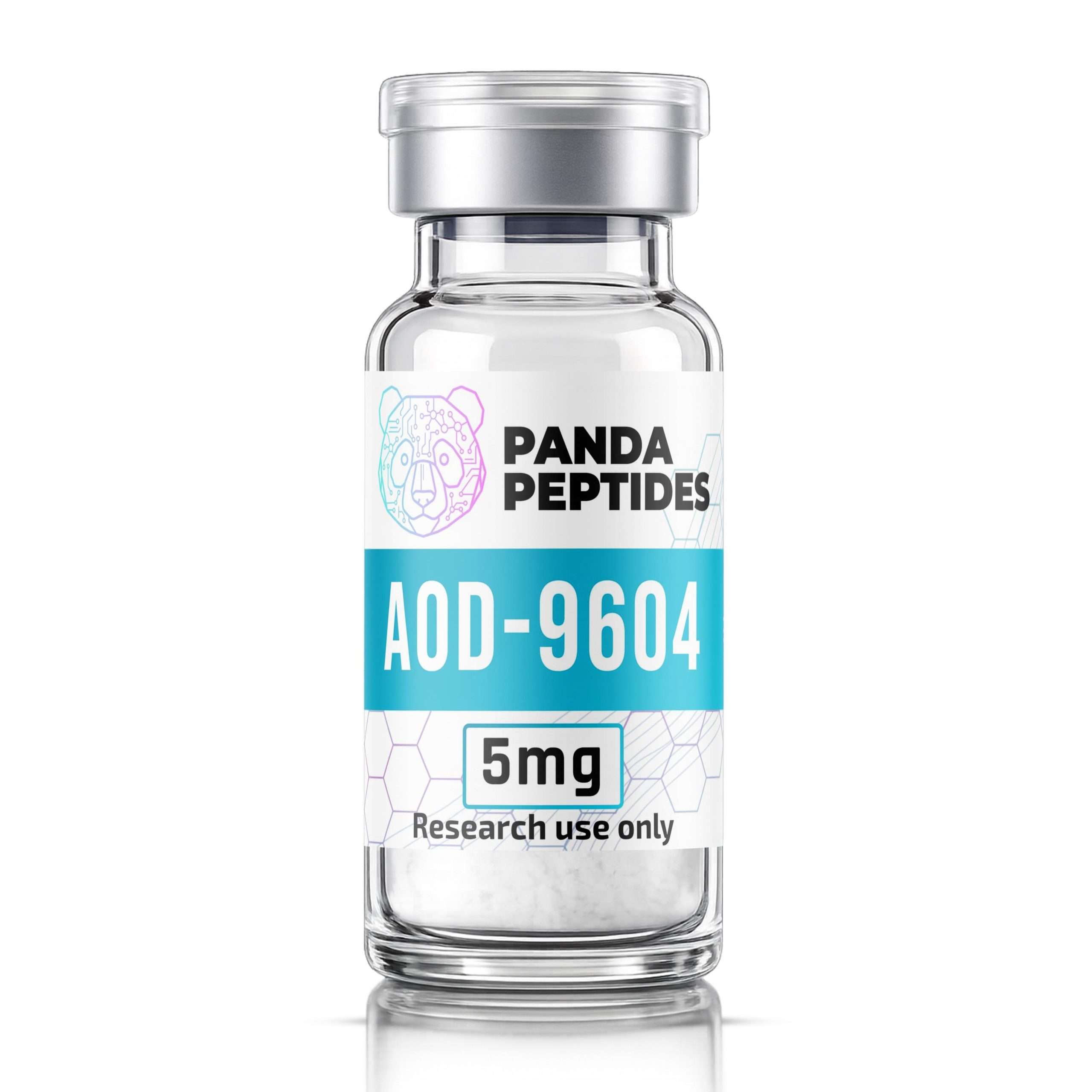
AOD-9604 is a modified 16-amino acid peptide corresponding to the C-terminal fragment (residues 176–191) of hGH, with an added N-terminal tyrosine residue. CAS 221231-10-3. Molecular weight 1815.08 Da. The fragment contains a single intramolecular disulfide bond between Cys-7 and Cys-14. Supplied as a lyophilized powder, >99% purity by HPLC. Research compound — for laboratory use only.
Compound Specifications
AOD-9604 (CAS 221231-10-3) is a synthetic peptide derived from the C-terminal region of hGH. It corresponds to amino acids 176–191 of the 191-residue hGH sequence, with an additional tyrosine at position 1, yielding a 16-residue modified fragment. The compound features a characteristic disulfide bridge formed between the two cysteine residues at positions 7 and 14. Research compound — for laboratory use only.
Product Details
- Compound: AOD-9604 (hGH Fragment 176–191, Tyr-modified)
- CAS: 221231-10-3
- Molecular Formula: C78H123N21O23S2
- Molecular Weight: 1815.08 Da
- Sequence: Tyr-Leu-Arg-Ile-Val-Gln-Cys-Arg-Ser-Val-Glu-Gly-Ser-Cys-Gly-Phe
- Disulfide Bond: Cys7–Cys14 (intramolecular)
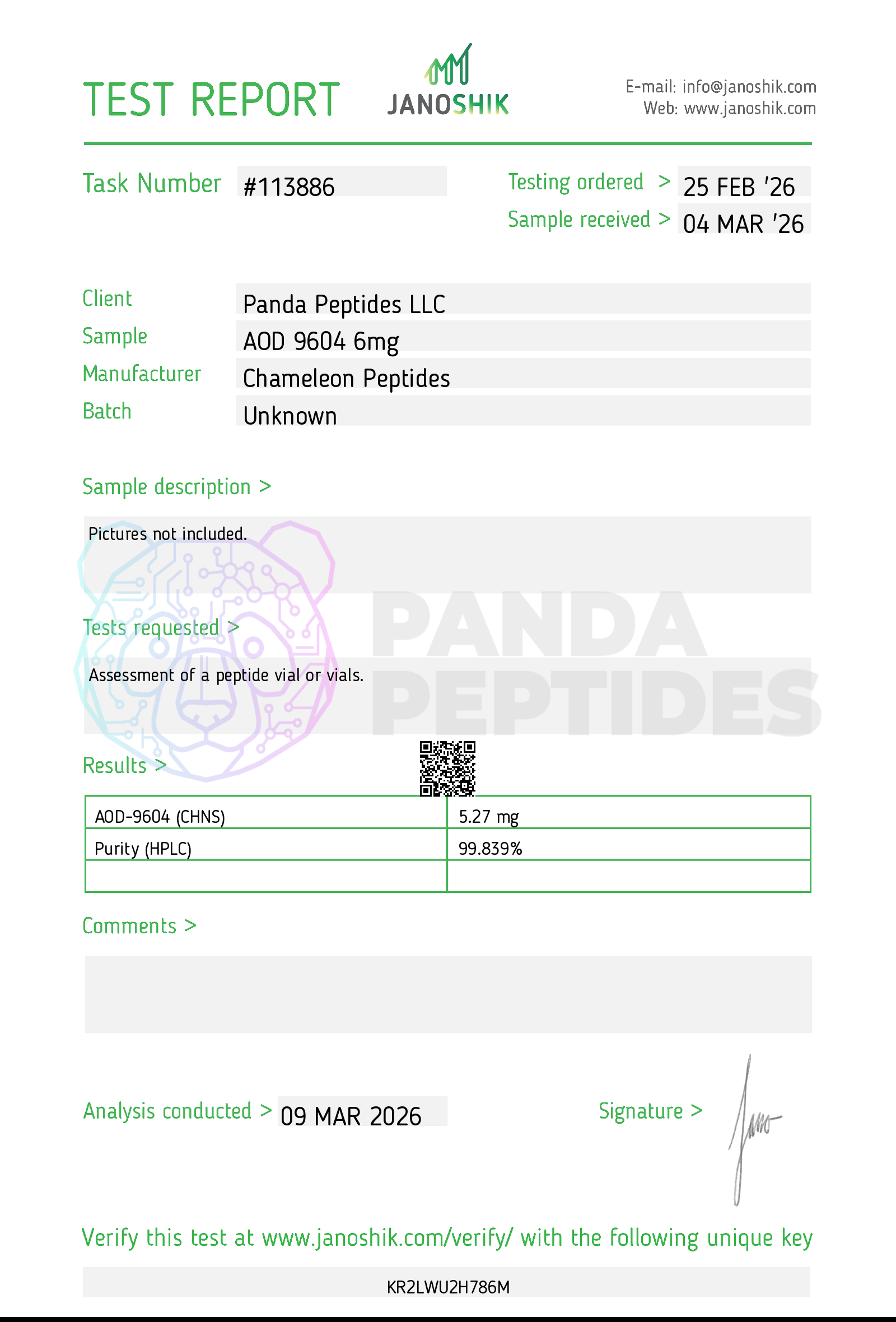
- Purity: >99% (Janoshik verified, HPLC)
- Form: Lyophilized powder (white to off-white)
- Solubility: Soluble in water and aqueous buffers
- Sizes: 5mg
- Storage: –20°C desiccated, protect from light
- Testing: View COA (Verified by Janoshik) →
Research Studies
Structural Characterization
AOD-9604 was first characterized as a truncation of the C-terminal loop of hGH. The peptide retains the disulfide-bridged loop structure present in the parent protein (residues 176–191) while the added N-terminal tyrosine enhances stability in solution. Structural studies confirm the disulfide bond between Cys-7 and Cys-14 is critical to maintaining the peptide’s tertiary conformation.
Physicochemical Properties
The isoelectric point (pI) of AOD-9604 is approximately 8.0, reflecting its net positive charge at physiological pH. The peptide is freely soluble in aqueous media and demonstrates good stability when stored as a lyophilized solid under inert atmosphere at –20°C.
📚 View Published Research on AOD-9604 →
Peer-reviewed citations from PubMed — for educational purposes only